Where Home Care Agencies Actually Lose Revenue (And Why It's Invisible)
Most home care agency owners can quote their gross margin from memory. They cannot tell you where 4 to 8 points of it disappear every month. Here's where to look.
April 28, 2025
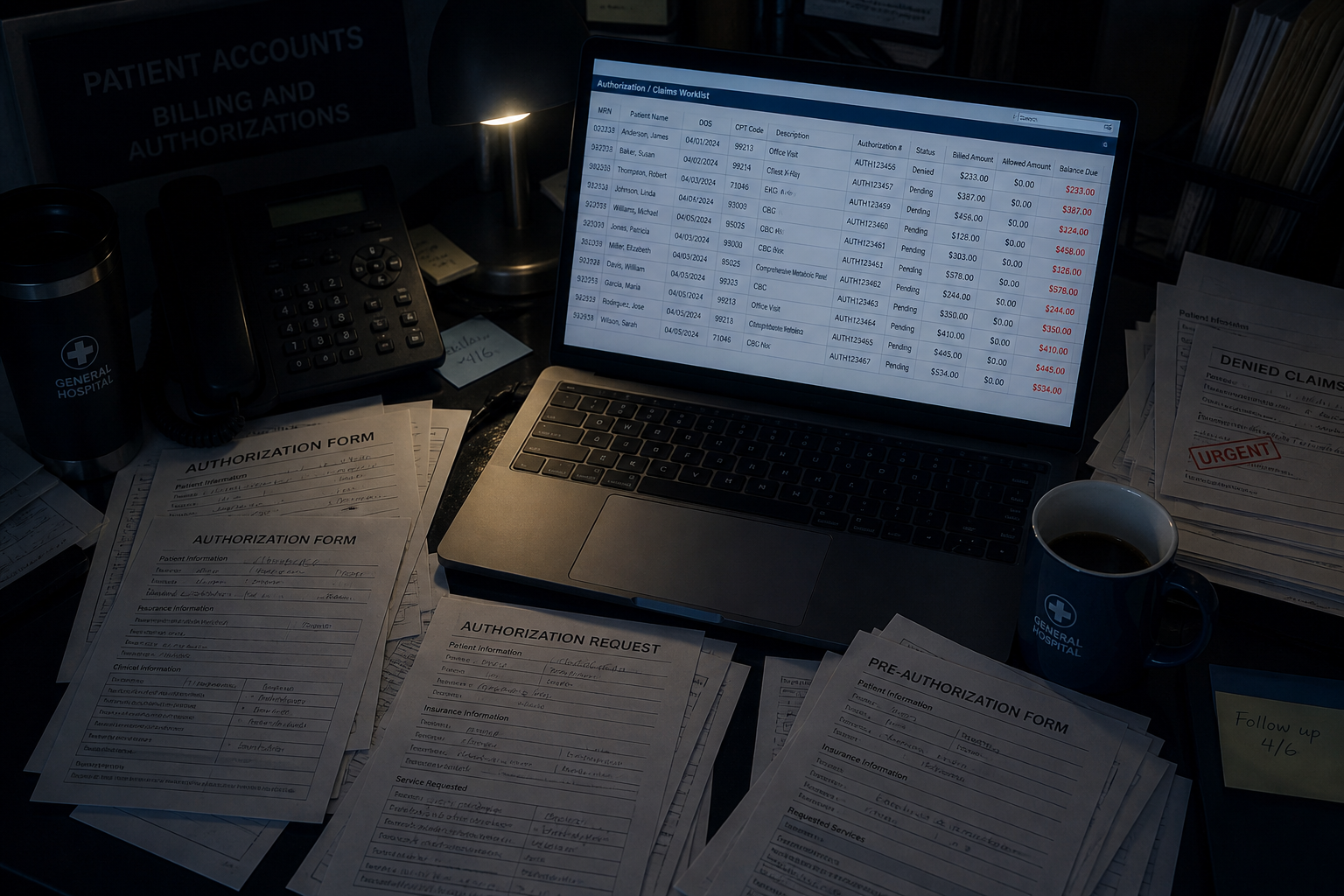
Most home care agency owners I talk to can quote their gross margin from memory. They cannot tell me where 4 to 8 points of it disappear every month.
That's not a knock. It's the nature of the business. The places where home care agencies actually lose revenue don't show up as a line item called "lost revenue." They hide inside scheduling decisions, documentation gaps, payer eligibility, authorization workflows, and the dozen small frictions between a visit happening and a dollar landing in the bank.
If you only watch the P&L, you'll never see the leaks. You'll just feel them, as the gap between the agency you think you're running and the one the numbers describe.
Here's the part that gets missed. AlayaCare is the system of record. It tracks. It captures EVV. It generates schedules and invoices. It does its job. But there's a gap between what AlayaCare tracks and what your operations actually need to act on, and that gap is exactly where the revenue leaks.
This is the gap we close at Daya Labs. The sections below walk through where the gap shows up most often, and what we build on top of AlayaCare to shut it down.
1. Authorizations that arrive in your inbox and never make it into AlayaCare
Every agency has the same workflow on paper. A new authorization arrives by email, by fax, or in a payer portal, and someone has to read it, interpret it, and re-key it into AlayaCare. Hours per week per case manager. Errors that look like typos but cost like denials.
When the auth doesn't make it in on time, or makes it in wrong, the visit still happens. The denial still arrives. The revenue is already gone before anyone notices.
What we build
Automatic authorization ingestion. We read incoming auth letters and portal records, parse them into structured data (service code, units, frequency, start and end dates, payer reference), and push the result straight into the AlayaCare client record. The case manager reviews instead of types. New auths go from "waiting on someone to enter it" to "already in the system, flagged for confirmation." Errors drop because humans aren't re-keying numbers anymore.
2. Eligibility checked after the visit instead of before
Eligibility lapses are one of the cleanest examples of revenue you've already earned and won't collect. The client was eligible last month. They're not eligible this month. Nobody runs the check, the visit happens, the claim gets denied, and the visit either gets written off or absorbed into AR for ninety days while someone untangles it.
AlayaCare records who the payer is. It does not, on its own, run an eligibility check in real time before every visit.
What we build
Automated eligibility checks at the moments that matter. At intake. At recertification. And on a defined cadence before scheduled visits. Results land back in AlayaCare on the client record, with the lapses surfaced before a caregiver shows up at the door. The denials you stop earning are the cheapest revenue you'll ever recover, because nothing about your service had to change to get them.
3. Reauthorizations that quietly expire
A client has 60 hours per week authorized through May 31. On June 1, the caregiver shows up. The visit gets logged. The bill goes out. The payer denies it because the new auth wasn't in place yet, or was in place for 56 hours instead of 60, and nobody flagged the change.
You will eat those visits. The caregiver still gets paid. The client still got service. The revenue is gone.
What we build
A reauth lifecycle that runs itself. The workflow watches end dates continuously, opens tasks 30, 14, and 7 days out to the person who owns the renewal, escalates when one is missed, and blocks scheduling that would exceed authorized units. AlayaCare stores the dates. We make sure they get acted on.
4. Unauthorized visits that nobody catches until billing
Even when reauths are handled, visits still slip through without a valid authorization behind them. The visit covers a service code the auth doesn't. It lands the day after the auth ended. The units for the period are already maxed.
AlayaCare records the visit either way. The mismatch only surfaces when someone tries to bill it, and by then the caregiver has been paid, the client has received service, and the revenue is at risk.
What we build
Reports and workflows that surface unauthorized visits as soon as they happen. Every visit that doesn't line up with an active, valid authorization gets pulled into a workflow and routed to the person who can act on it. AlayaCare records the visit. We make sure your team sees the unauthorized ones in time to fix them, instead of finding out at the billing run.
5. Scheduling decisions that print overtime
Overtime in home care is mostly a scheduling problem, not a staffing one. When a scheduler is racing to fill a shift, the fastest path is the caregiver who already knows the client, even if that caregiver is already at 35+ hours for the week. The shift gets filled. The agency just paid 1.5x for hours another caregiver could have covered at straight time.
Multiply that decision across every branch every week and overtime becomes structural rather than exceptional. The leak isn't the OT itself; it's the OT that nobody decided to pay.
6. AR that ages because no one is actively working it
Then there's AR. The difference between an aging report and an aging process is large, and it shows up in cash flow. Claims that age past 90 and 120 days collect less reliably and quietly shrink growth: delayed hires, deferred raises, paused marketing.
The revenue isn't lost on day 90. It's lost on day 180, when nobody had time to chase it.
The pattern underneath all of this
Each of these problems has a clear owner inside the agency. Scheduling owns overtime. Billing owns claims. Intake owns auths. Operations owns eligibility. Finance owns AR. But revenue leakage as a category doesn't have an owner. It lives in the seams between teams, and the seams are where it grows.
AlayaCare is excellent at being the system of record. It's designed to track, capture, and store. It is not designed to chase, validate, route, and escalate on your behalf. That's a workflow layer on top of the platform, and for most small and midsize agencies, it's missing.
That's the layer we build at Daya Labs. Auth ingestion and eligibility checks are where most of our engagements start, because that's where the math shows up fastest. But there's a lot more on top of AlayaCare that we touch: integrations, monitoring agents, custom analytics, exception handling, the unglamorous middle of the platform that nobody sells well.
The six leaks above are a sample, not the list. Less noise. More performance. Measured by what shows up on the P&L.
If you're on AlayaCare and any of this sounds familiar, talk to us. There is a lot more under the hood than what fits in a blog post, and the only way to know which loop is costing you the most is to look at it together.
Prêt à tirer le meilleur d'AlayaCare?
Réservez un appel diagnostique et nous vous montrerons exactement où se trouvent vos plus grands gains d'efficacité et de revenus.